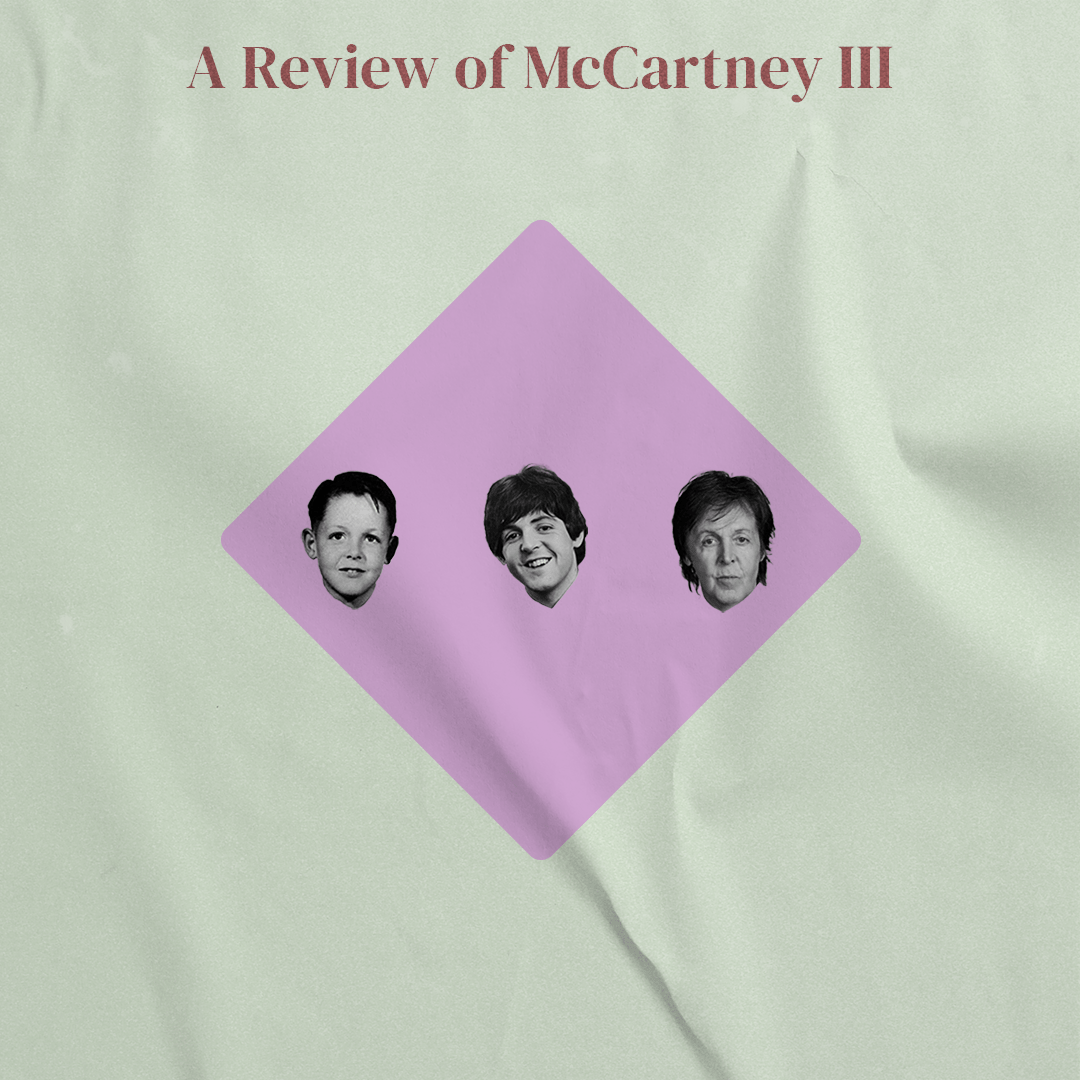
Most Beatles solo work has been middling at best, but Paul McCartney has been the exception. From his forays into the avant-garde to his pop albums, he has been consistently putting out enjoyable albums. Although slightly insipid, McCartney III stands as a competent addition to his discography. McCartney III was recorded in early 2020 in Sussex, at McCartney’s home during the lockdown. Almost every instrument present on the album was recorded by McCartney, just like on his other self-titled albums.
Like in most of Paul’s albums, the simple pop songs are the most pleasing. ‘Long Tailed Winding Bird’ stands out as a clear exception, layering various instruments over a central acoustic riff without losing out on the quintessential McCartney charm.
Lyrically, the album plays it safe. McCartney’s genius lies in beautifying the mundane. Most songs here have a charming, pedestrian vibe to them without sounding too plain. ‘Pretty Boys’ has some of McCartney’s best lyrics this side of the millennium and makes its point without ending up being a convoluted mess. It is a scathing criticism of the way photographers treat models, which is probably something he completely understands. McCartney’s penchant for saccharine lyrics is showcased best in ‘Women & Wives’ albeit with the same ‘create a better future’ message while running in circles with the same banal message.
Even though McCartney III clocks in at a trim 45 minutes, there is a sense of monotony that settles into the second half. The songs almost bleed into each other, and in an album filled with similar pieces, what could have been a chance to experiment ends up being the weakest section of the album.
McCartney I was released after the Beatles disbanded, while McCartney II came right after The Wings separated. Both albums were products of their time, sonically and otherwise. McCartney III, however, seems to be the end of a trilogy long overdue.
McCartney could have stepped down a long time ago or could have just been one of the many artists from his era today, a product of a bygone era that capitalizes on nostalgia, but the one thing that separates him from them is his need for progress, his desire to make the next hit. For this alone, McCartney can be commended. The fact that he can come up with a competent album at 78 that you can throw on shuffle on a lazy Sunday is an achievement in itself, and one that shows he is not to be taken lightly even in the twilight stages of his career.
 Chords & Co.