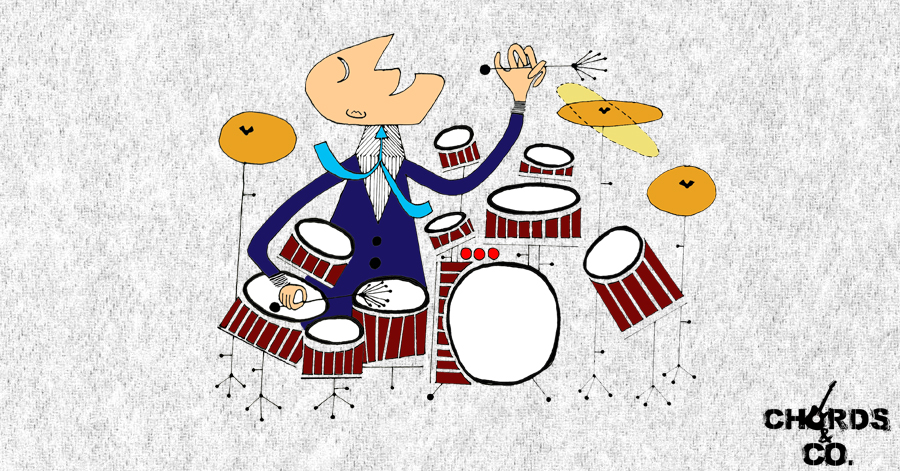
The drum kit signifies freedom. It signifies the birth, life and death of a free human, a rebel, someone who swims against the flow of the river. The drum kit is a magnificent instrument and the most important in a band for many reasons. It provides a backbone and structure to a song and also keeps all the band members’ tempo in check. Other than this, the instrument is not bound by the rules of chords, scales, octaves and is incredibly cool to play. This instrument is not for everybody though; it requires an immense amount of hand, eye and feet coordination which only a few have mastered in their entire lifetime.
There are many things to consider when it comes to starting out with an instrument like drums. What parts to buy, how to practice, what to play, how to play and the most important— how to maintain and take care of your drums. Well, this article will answer all of your questions.
WHICH DRUM KIT SHOULD I BUY?
When it comes to buying a drum kit, there are many good companies out there. For a beginner, the company Havana would be the best. They have the perfect sounding drum kits for someone who’s starting out. Their set generally consists of a hi-hat, a snare, a floor tom, a kick bass, two toms and two cymbals which are durable and can take quite a hit for a good amount of time. They’re also easy on the pocket.
For an intermediate or veteran, building your own drum kit is the way to go. A bespoke, ideal set would consist of the snare and drumheads from Evans, the kick bass, floor toms and upper toms from Pearl, and the cymbals including the hi-hat from Paiste or Meinl. Vic Firth is an excellent option for drum sticks as they use the best quality wood and also cater to special requests from the customers themselves.
HOW SHOULD I PRACTICE?
Start by learning how to hold the sticks and using just your wrist to strike the drumhead or cymbals. The YouTube channel, Drumeo ( https://www.youtube.com/user/freedrumlessons ), is a great place to learn; most fundamentals are covered. Other than this, playing rudiments is an excellent way to improve your hand-eye coordination, increase your sticking speed and also to think quick on your feet. Practising rudiments should be followed like a religion when it comes to playing the drums— whether you are just practising, recording or playing at a gig. They are a great warm-up.
After you’ve mastered holding the sticks, using your wrist and practising your rudiments, it is time to learn the intricacies and the subtleties of the art like playing triplets, flams, dragging and rushing and incorporating these extra touches into your regular drumming.
HOW DO I MAINTAIN MY DRUM-KIT?
When it comes to maintaining the drum kit, there’s not much to do other than making sure it stays in a dry place, as the screws holding the drumhead to the body of the drums may rust and deteriorate.
Always keep your drum kit dust-free, by continually practising of course. Another important way to maintain the kit, especially the drumheads, is using only the tip of the sticks and not their body. The tip comes with a protective nylon cover so as to not damage the drumheads and thus making them last longer.
Music is at the core of humans and as we nurture that skill, we must also grow with the instrument we choose.
We, at Chords&Co. , hope to have helped you pursue the instrument of your choice. Do try your hand at them and show us your full creativity.
Written by Crew Member- Ojas Shah
Edited by Crew Member- Meenakshi Swami
Artwork by Crew Member- Priyesh Bahuguna
 Chords & Co.