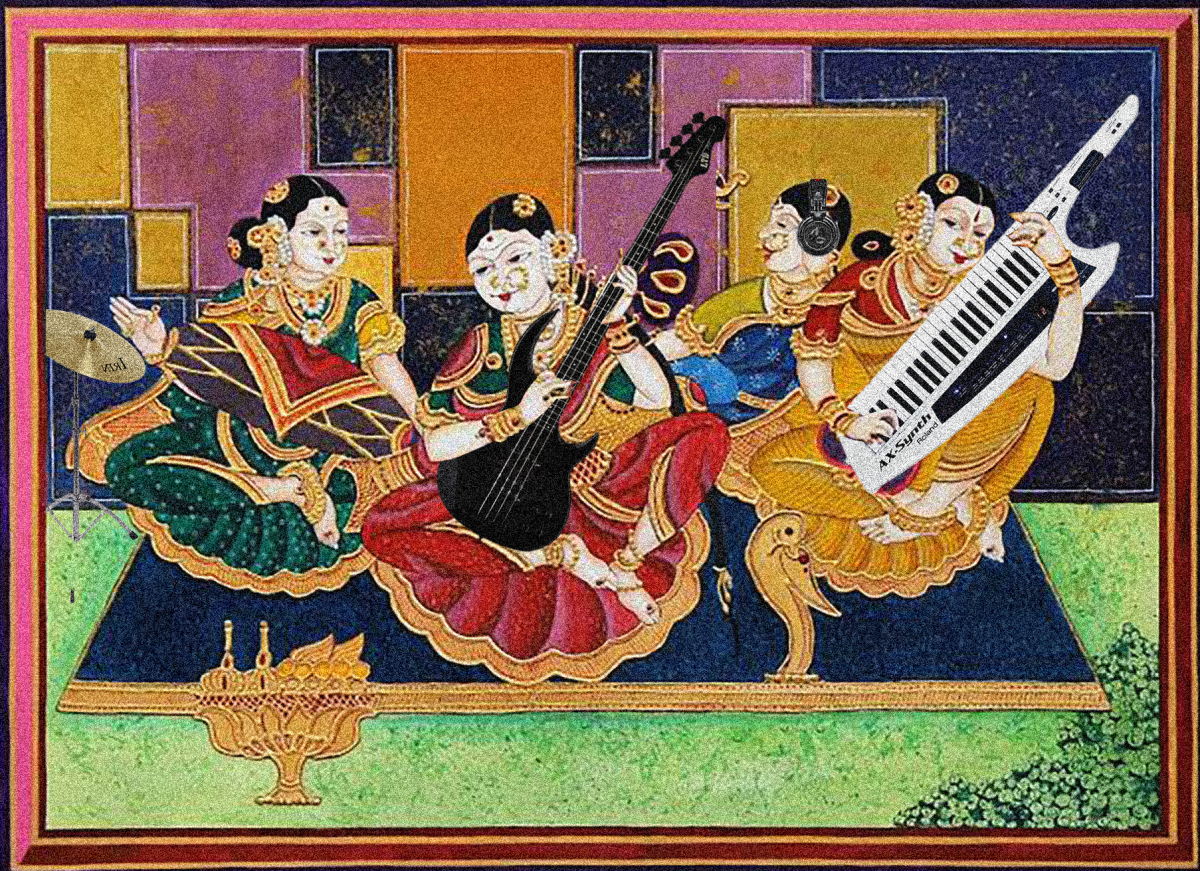
To truly begin speaking about fusion, we should go back in time and get to know about the effects of globalization on music. Globalization saw the advent of the interaction between different genres of music, sometimes even crossing the barrier of being from different countries. One exemplary example would be that of classical music in India. Almost on the verge of extinction, Indian classical music is making a sure shot comeback with many young musicians taking it over and mixing it up with a variety of more popular genres of music and creating some fabulous Indian fusion numbers for younger audiences.
Globalization led to the formation of “World Music” today. World music is a musical category encompassing many different styles of music from around the globe, which includes many genres of non-Western music including folk music, ethnic music, traditional music, indigenous music, neo-traditional music, and music where more than one cultural tradition, such as when ethnic music and Western popular music intermingle.
Even though fusion is considered as a relatively newer face of music, it had already been an old friend to Indian music centuries back. An example of Indian fusion is Hindustani music, which is, in fact, a variant of Classical Indian music that was influenced by Sufi music trends.
Fusion trend is said to have begun with Ali Akbar Khan’s 1955 performance in the United States. Indian fusion music came into being with rock and roll fusions with Indian music in the 1960s and 1970s. But it was limited to Europe and Europe and North America. For some time the stage of Indian fusion music was taken by Pt. Ravi Shankar, the sitar maestro who began fusing jazz with Indian traditions along with Bud Shank, a jazz musician. Soon the trend was imitated by many famous European and American music exponents. In the year 1965, George Harrison played the song, “Norwegian Wood” on the Sitar. Pt. Ravi Shankar’s music with the Beatles enhanced not just the value of Indian-Western fusion but also won Indian music worldwide recognition.
Fusion, as the name suggests, is the bringing together of two forms of music. The perk to this lies here; each form has its own manifestation, some may like it, and some may not. But bringing two different music forms enhances its value and makes it more appreciable to the audience. Moreover, it brings in diversity, that helps the listener to travel into different styles, sometimes from different countries, and helps them, recognize their tastes in music. The Mahavishnu Orchestra of John McLaughlin pursued fusion with great integrity and authenticity in the mid-1970s. In the process, John joined forces with L. Shankar, Zakir Husain and others.
Fusion is not just a form of music but is instead a culture whose civilization can be found throughout the world. It is not for a particular person or country but is for everyone who cherishes music so much so that they are ready to experiment with it. It has helped bring artists from across the world to unite with fan bases across the globe. Take, for instance, Korean music evolved from its Buddhist influenced nature into a much more sophisticated version involving popular music genres like hip hop, pop, etc., giving birth to bands like BTS. Not just that, if you enjoy anime, you may have noticed many songs have a heft Japanese influence that is paired with a modern ambience so that the audience can relate.
The Breton musician Alan Stivell pioneered the connection between traditional folk music, modern rock music and world music with his 1972 album Renaissance of the Celtic Harp. Around the same time, Stivell’s contemporary, Welsh singer-songwriter Meic Stevens popularised Welsh folk music. Bob Delyn a’r Ebillion further developed the fusion of modern instruments and traditional instruments in the Welsh world. Lebanese musical pioneer Lydia Canaan fused Middle-Eastern quarter notes and microtones with anglophone folk and is listed in the catalogue of the Rock and Roll Hall of Fame and Museum’s Library and Archives as the first rock star of the Middle East.
Fusion has led to the acceptance and usage of instruments internationally, giving rise to an era of new possibilities. Movies can now express their feelings through their songs invariants, each different from the other in feel and emotion. Artists and bands now have the power to demonstrate their prowess by experimenting with different genres, giving us the unique songs that we always aspire to hear. Fusion helps budding artists to rise from the horizon and let their talents take off in manners inexpressible. Moreover, the adoration of multiple artists who belong to different genres helps the artists present themselves to the world in a suitable fashion. Fusion helps us to reunite and reconnect with history time and again. It holds the story of what was, what is, and what can be. It helps us to drift to an outlook we never imagined would exist. It helps us believe that along with the perspective of the artist, what we perceive is also instrumental in giving new meanings to the songs we listen to every day. It helps us direct ourselves to understand the importance of the vast diversity of music that we hear every day.
Written by Crew Member- Stephen James
Art Piece by Crew Member- Jishnu
 Chords & Co.