
(Based on information related by various musicians of Manipal)
From the mouth organ to the ukulele, there are few instruments unexplored by the pool of talent that is Manipal. Needless to say, the musicians’ attachment to their instruments is surreal, and a scratch on their instrument is like a knife jabbed into their heart. While some have been playing instruments for years now, there are many amateur instrumentalists who are at a loss as to how to maintain their instruments — not just in Manipal, but in general.
This comprehensive guide to instrument care, complete with general maintenance measures coupled with certain Manipal-specific ones. tells you how, so that you don’t have to bear the excruciating pain of that one scratch on your instrument.
-
The Guitar

How to maintain it
- The fretboard needs to be dusted/cleaned every day, given Manipal’s climate.
- The fretboard needs to be oiled with lemon oil to keep it clean. Strings are to be removed during oiling. Lemon oil protects your guitar from fungus.
- However, since lemon oil can be quite expensive, cleaning with a microfiber cloth before and after practice works just fine. Lemon oil and polish is a good idea before gigs and recordings.
- Do not use heavy gauge strings if your fretboard tends to bend frequently.
- Wipe your strings every day. That way even the little amount of rust caught every day is removed. Apply string polish once a month.
- Preferably, wash your hands with soap before you play it.
- Put some silica gel in your guitar cover to protect the chrome and wood from moisture.
- If you have a guitar strap with metal on it (metal skulls, for instance), never leave it with your guitar in the guitar bag as the strings will get rusted because of the metal.
- During the rainy season, change of strings is a must, at least once a month for good tone and sustenance. At other times, strings should be changed once in 3 months.
- The action of the neck changes during rains; accordingly, that has to be checked and adjusted by spinning the truss not more than 1/4 – 1/8th of an inch at a time.
- Preferably, keep the strings detuned when you are travelling.
- Keep it in a cool place, away from direct sunlight.
- Keep your guitar covered when not in use.
- If a tuner is inbuilt, make sure the batteries are removed when not in use for long.
Casing/cover:
- A hard case is the best; however, as it is quite expensive, a standard guitar cover works just fine.
- Cushion padding on the interior not only prevents physical damage but also keeps the strings away from moisture.
- A heavy padded gig bag is convenient during travel.
- A hard casing is preferable during the rainy season.
- Preferably keep silica gel packets in your guitar bag.
Carrying your Instrument to College
Bringing your guitar to college can be quite an ordeal, but we’ve got you covered.
Remove the strings and pack it up in a guitar case, preferably a padded one. Remember to keep extra plectrums and a set of strings with you.
If you’re travelling by air, you don’t wanna check it in with your other luggage. Instead, carry it inside with you and tuck it safely in the plane’s cabinets. You’ll probably be greeted by rain when you reach Manipal, try to keep the guitar dry. Wrapping it up in plastic or bubble wrap is a good way to keep the rain away.
Clean it up with a dry cloth before restringing it. Check out this excellent video if you’re unsure how to.
Take it outside only if you must, because it WILL be raining all the damn time. Drop the guitar in the library if starts raining on your way from the academic block and hope it stays safe. Only if there’s no other option.
Scratches tell their own story, but you wanna keep the guitar in a safe corner of the room when you’re not playing it. If damage has been done and care is needed, Bhakta’s music, behind VGT, is the place to visit.
-
The Ukulele
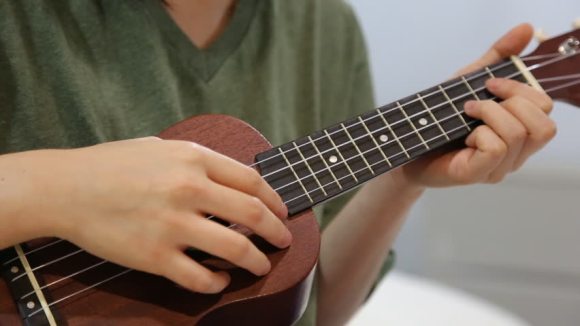
How to maintain it:
- Always clean the instrument after playing it. A quick wipe-down with a soft cotton cloth works perfectly fine. Avoid using anything harsher, including paper towels. This wipe-down is important in order to ensure that your sweat does not get mixed with dust, else it can gunk up your instrument.
- Wipe the strings clean after use.
- Washing your hands before playing is a good habit.
- Keep the instrument covered when not in use. That being said, even the flimsiest piece of cloth provides a certain level of protection dust and light.
- Avoid leaving your uke in direct sunlight, near heaters, or in a hot car.
- Use a hard case during travel.
- If the air is very dry, the wood on the uke can crack. Invest in a humidifier to avoid this problem. Just put this little device in your ukulele case and it keeps the conditions more use-friendly. The investment is worthwhile as humidifies are pretty inexpensive. However, given Manipal’s climate, you may not require one at all.
- When the air is damp, the uke can warp. This is more common with solid wood ukuleles than laminated ones. Leave a silica gel pack in the ukulele case to avoid this problem. Ukes mostly come with silica packs by default, but they’re also cheap and easy to buy separately.
- Make sure you keep your instrument in a place which is not exposed to temperature changes.
- Most of the maintenance steps for a ukulele are similar to those for a guitar.
- Play it regularly; that is the best way to maintain it.
Casing/cover:
- Preferably use a padded case.
- Using a hard case is advisable when you travel.
Carrying your Instrument to College
Being a conveniently small instrument, bringing your ukulele to Manipal shouldn’t be an issue. But if you are highstrung about caring for your instruments, please do give this article a read before you bring your beloved 4-stringed friend to its new home.
Most ukuleles are made mostly of wood which requires 50% relative humidity for optimum performance. Good thing Manipal provides the ambient humidity year round being placed so strategically near the coast. Your ukulele won’t feel too far away from its Hawaiian origins in its new home away from home. Any adverse variations in temperature and humidity can cause damage if there is prolonged exposure to such environmental conditions. Nobody wants a cracked or warped Ukulele, so make sure to store it in a safe dry place, with an in-case humidifier if need be.
Since humidification is mostly taken care of by itself, the most important aspect that needs to be actively taken care of, is keeping the instrument clean. Use a soft cloth to wipe the instrument regularly. Using polishes/ oils/ cleaners is an optional step recommended when changing the strings. But be sure to use them sparingly and as per the product instructions. This brings us to the next crucial step in this care regime, changing strings. Typically, strings should be changed out with new strings every 3 to 6 months, maybe sooner if your ukulele is played often. End screws may be tightened and friction tuners may need adjusting from time to time as a result of seasonal/ environmental change.
We hope we aren’t stringing you on with all these instructions but we promise this is the last point. Some ukuleles love the limelight and some don’t, but all ukuleles want love and care. So don’t forget to give it the attention and pampering it deserves.
-
The Violin

How to maintain it:
- Always clean your violin after playing. The varnish on the violin is made of rosin; so, any rosin left over on the body of your violin can cling to the instrument and become dirty. This will ruin the finish of your instrument, and you will eventually have to get it re-varnished if you do not clean it properly.
- Use a soft, lint-free cloth to clean your violin. Many violin stores sell inexpensive clothes that are ideal for cleaning your violin.
- Clean the bow after you play.
- Never use alcohol or other solvents to clean your instrument; they can strip your violin of its varnish. Even hot water can hurt your violin.
- Although violin pegs look deceptively simple, their physical mechanism is complex because it must fulfil two contradictory requirements: on the one hand, pegs must move easily so that the violin can be finely tuned, and on the other hand, they should hold the strings firmly in place so that the violin stays in tune for as long as possible, regardless of changes in temperature, or whether the instrument is moved from one location to another. No peg can maintain this balance over time without requiring some care. Problems tend to occur at the beginning and end of the heating season when temperature changes cause the wood of the pegs to contract or expand. Peg lubricant helps stiff pegs turn more smoothly, and can be purchased from a violin maker or a music shop. Peg chalk solves the opposite problem and prevents slippage. Pegs can be prevented from sliding out when new violin strings are put on: guide the string so that it lies very close to the edge of the peg box as you wind it. Whatever the violin case may be, the pegs must always fit well. Violins should be looked over regularly by a luthier, who will then check the condition of the pegs.
- If you use a chin rest key, make sure that you do not insert it into the hole too far, or it will scratch the violin on the other side.
- Try to touch the violin only by the neck and chinrest.
- Avoid touching the hair of your bow with your hands.
- Always loosen your bow when not in use.
- Never use glue on your instrument.
- Support the neck while tuning.
Casing/cover:
- A hard case is the best.
- A standard synthetic cover works fine too.
- Prefer a hard case while travelling.
-
The Keyboard/Piano

How to maintain it:
- Refrain from keeping heavy loads on your keyboard/piano.
- Keeping it away from moisture, and also from leaks and spills. Although the newer models may be able to endure those to a limit, it is advisable to avoid it nonetheless.
- Being an electronic device, the performance may not be much affected by dust and/or dirt, but it is still advisable to keep it clean and away from the same.
- Keep it away from direct sunlight.
- You can use a dehumidifier which is electronic, and perpetually on.
- Keep it covered when not in use.
- Always use clean and dry hands before playing.
- Play it frequently.
- Regular tuning after 6 months is a must.
Casing/cover:
- The normal keyboard bag is mostly sufficient. The outer covering is nylon/canvas with foam padding in between.
- You can use a silk cloth with plaster, and further, a cover on top of it.
- Keep a cloth on the keys before shutting the piano.
Carrying your instrument to College
Your Keyboard Synthesizer is a hefty and hulk of an instrument. Bringing it along with you to college must be giving you nightmares! This article might help you sleep better at night!
Firstly keep it in a case, even a soft case is good enough to protect the keys and the knobs.
If you want to be extra careful, you could buy a cardboard box which would be slightly bigger than your keyboard. Make sure to bubble wrap your keyboard before keeping it in the box. You may even use thermocol to prevent movement of your keyboard in the box.
Whenever you keep all your luggage together, make sure to keep the keyboard above all your other luggage or instruments. This way your keys will go unbroken and unscratched.
Don’t forget to get its cables and adapters. Keep them in your case with the keyboard. You don’t want to hun for them later.
Always keep an extra power adapter in case your adapter is lost or stops working suddenly.
Lastly if you feel that carrying your keyboard is too stressful and you won’t be able to manage with the rest of your luggage, you can always ship it. Shipping companies are pretty reliable.
Better be safe than sorry!
-
The Flute
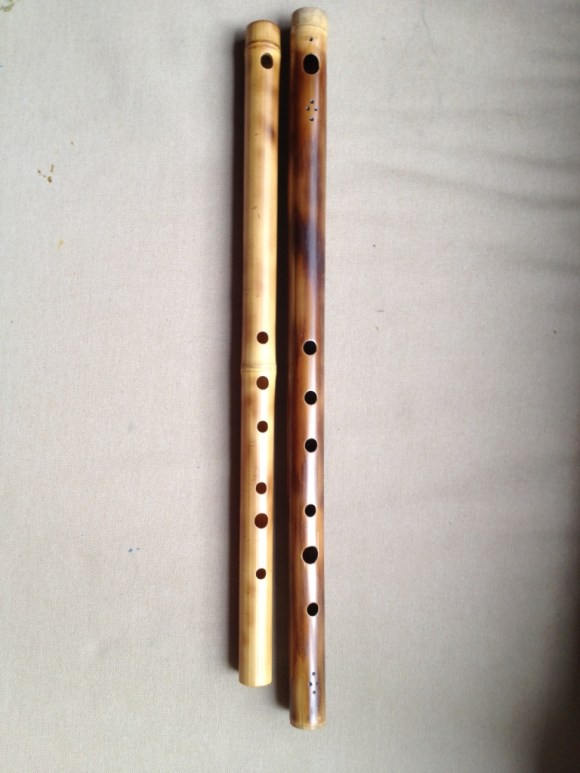
How to maintain it:
- Moisture and high temperature can harm it.
- When your flute is dusty, wipe it with a wet cloth. Following this, wipe it dry with a dry cloth. You can use soapy water.
- A rod and a cloth are all you need to clean the insides of the flute.
- Preferably, avoid polishing your flute. Never use silver polish as it is abrasive.
- It is normal for a silver or a silver plated flute to tarnish. Get it de-tarnished by a repair technician when you get your pads replaced after 5-10 years.
- Maintenance of the flute is mostly simple, but make sure you don’t use it roughly.
- A flute does not need to be taken to a technician very frequently. It needs to be taken to a technician if you have to get its pads changed, or if it is broken.
- Be extremely careful while assembling and disassembling it.
- Make sure you never bang your flute against a hard surface.
- Never keep anything on it.
- Take second and third opinions if you are told that your flute is broken.
Casing/cover:
- Any small box which encloses the flute should suffice.
-
The Percussion Family
-
Tabla, Dholak, Congo, Nagada, Darbuka
How to maintain it:
- Always keep your instrument inside the bag in a dry place with a normal temperature. Extreme conditions always damage the instrument.
- Never use water to clean the skin of the instrument.
- Keep a packet of dry sand inside your bag if the weather outside is very humid. Silica gel packets can also be used for the same.
- Always cover the skin of the instrument with a velvet cloth (easily available at any music shop).
- Always apply some talcum powder in your hands before playing. This not only reduces the friction but also prevents sweat and moisture from ruining the skin of the instrument.
- Avoid using too much talcum powder while playing as it mutes the tone of the instrument. Just a pinch of talcum powder is enough to get the desired smoothness.
- Avoid keeping heavy loads on the skin of the instrument.
-
The Drums
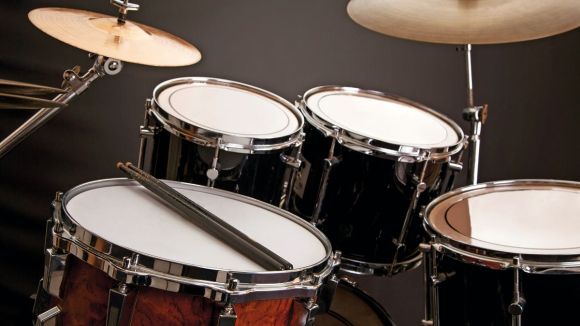
How to maintain it:
- Direct sunlight is not good for drums as the membranes are not made of animal skin.
- Always cover it with a regular cloth in a moist or humid climate.
- Tune your drums every once in a while.
- Apply lubricant to the threaded parts of the stand to ensure smooth and easy operation.
- Periodically tighten the bolts holding the snares.
- Lubricate the pedals once in a while.
- Wipe off excess with a dry lint-free cloth. Never use pliers to tighten wing bolts or wing nuts.
- Pedals can be cleaned using a soft damp cloth. Wipe clean, and polish dry with a clean dry cloth.
- Always use a soft lint-free cloth. Avoid using paper towels.
- You can use maintenance sprays like “Zorrik” or wd-40.
- If it fits your budget, it is a good idea to change the drum heads in intervals; once in 4 months if you play regularly. However, this can be an expensive affair, so make sure you are absolutely sure about it.
- (Inspect the snare wires for stretched, bent, or broken wires once in a while, and replace if necessary. This is not usually required for a large span of time.)
Casing/cover:
- Hard cases – plastic or fibre, lined or unlined.
- Soft bags
- Hardware
- Trap cases
- ATA cases and drum trunks
Carrying your instrument to College
One of the greatest problems any drummer faces is not how to play the flams or accents, itʼs
transporting the drum kit from one place to another. Especially if one is travelling long distances,
then it becomes very difficult.
One of the main concerns whiletransporting a drum kit is not to damage any of the drumheads
and cymbals as the are very hard to replace. The best way to make sure this doesnʼt
happen is to dismantle the kit into its individual parts and pack them in bubble wrap and put them in boxes and ship them off to college.
Now that the kit has reached college and has been assembled, the job doesnʼt end
there. Taking care of the instrument is just as importantas playing the instrument. The
drum kit should be cleaned witha wet cloth and then with a dry cloth at least once a week so
that dust does not accumulate and the pedals donʼt rust.
Last but not the least, never forget your key, itʼs essential to tune, assemble and dismantle the drum kit and never forget to carry an extra pair of drumsticks with you in case of any unfortunate event because itʼs always good to be safe rather than sorry.
-
The Mouth Organ
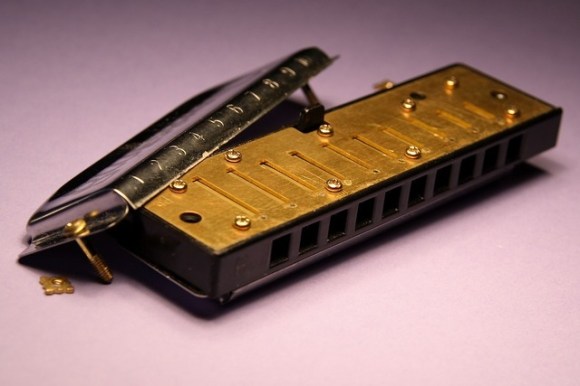
How to maintain it:
- Avoid blowing /sucking too hard as it can damage the reed plates of the mouth organ, thus detuning your instrument.
- If the reeds are already detuned, you can open up your instrument in your room, and adjust the reeds on your own with the help of your tuning kit. Here’s how:https://m.youtube.com/watch?v=twXsbFuSE7YHowever, if you don’t have a tuning kit, you can use a piece of paper, and a normal filer tool to adjust and tune the reeds. Here’s how:
https://m.youtube.com/watch?v=AfQGUF0u_jc
This lesson basically teaches you to adjust the reed gaps, making the mouth organ easier to play in case any note is stuck.
- Always wipe away any moisture on your mouth organ.
- Run your instrument under water only if its comb is made of plastic or sealed wood. It is advisable that you do not do so if it is metallic or wooden.
- If you do get it under water, make sure there aren’t any water droplets inside when you store it.
- The water you use must be lukewarm.
- Always wipe it clean after playing. After each use, tap the instrument on your hand, leg, or a towel to knock out any loose saliva. This will help keep it clean and help reduce the amount of build-up in the instrument. Not doing so might affect your comb.
- When you place it in the case after use, leave the case open for a while. This helps any moisture in the instrument to dry.
- If your mouth organ has a wooden comb, don’t keep it open as the wood might swell.
- While it is imperative you keep your instrument clean, cleaning too often may damage your instrument.
Casing/cover:
- Most good quality mouth organs come with a velvet lined case. It keeps your instrument safe and dry.
- A plastic case works fine too.
If you are planning to buy/get your amps as well as speakers but have budget issues, you could buy just one of them. An amp can be used as a speaker and vice versa. Mic to 3.5mm audio jack or 3.5mm to mic jack audio converters are easily available in any electronic shop or online. This will save you money, as well as space.
You can occasionally open up your instrument to see the meticulous work on the insides, and to appreciate the sheer beauty of it. It is always a good idea to be aware of the components and the working of your instrument. However, be extremely careful when you disassemble and assemble it.
While necessary maintenance steps need to be taken, practising regularly is undeniably the best way to ensure the longevity of your instrument. Therefore, keep playing; you never know when a merely 2-minute melody can soothe your roommate or your friend and isn’t that absolutely beautiful?
Pro tip: If you want your instrument to last, never give it to your friend!
— Priyanjali Roychoudhury, Kartikeya Yadav
 Chords & Co.
One reply on “Instrument Care: A Comprehensive Guide”
Very useful
LikeLike